EN
EN

-

ER Battery + LIC for IoT: Li-SOCl2 High-Pulse Power Guide
2026/08/31Learn how ER Li-SOCl2 batteries combined with Lithium-Ion Capacitors support long-life IoT devices requiring high pulse current, including NB-IoT, LoRa, smart meters and tracking systems.
-
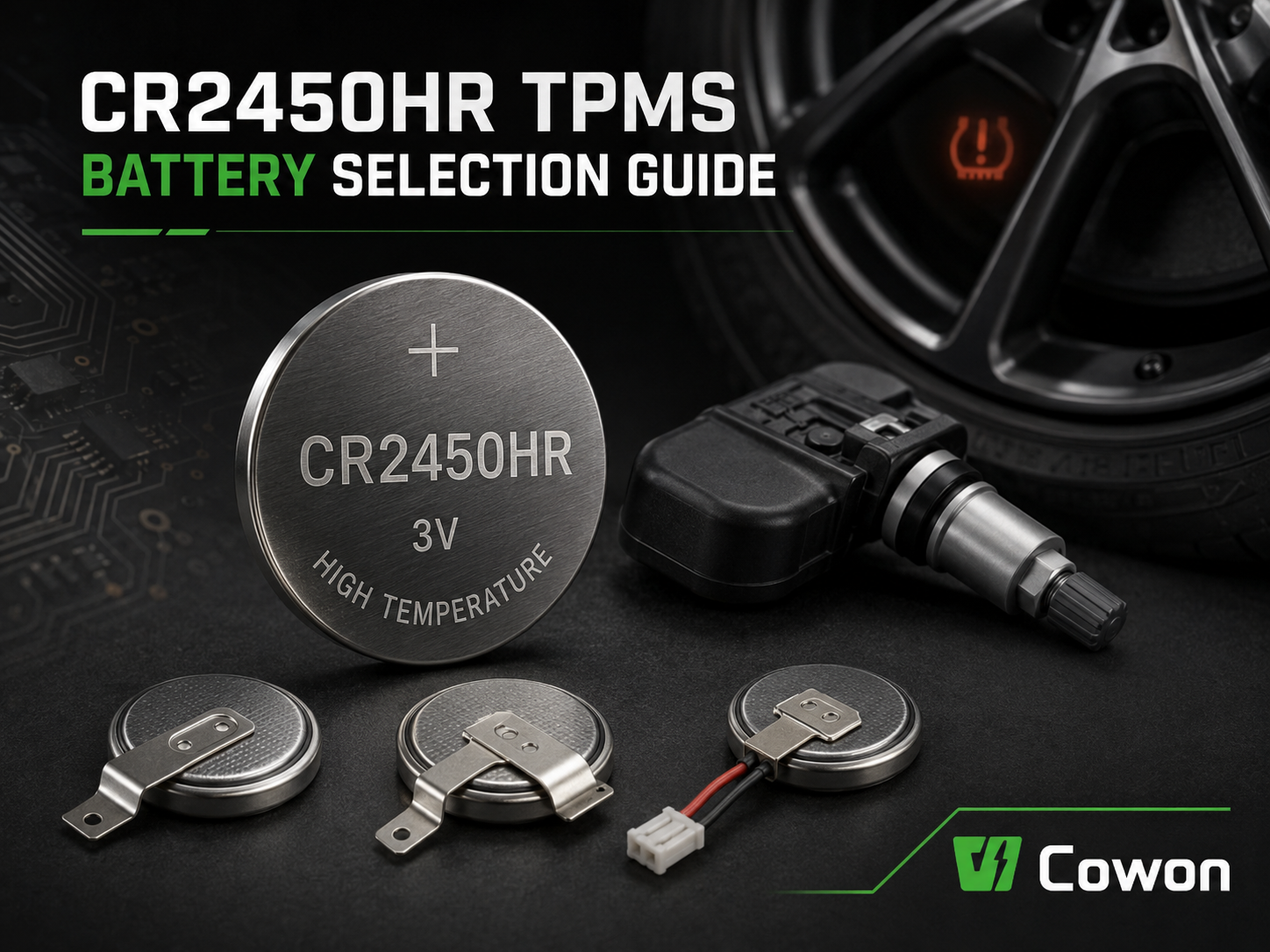
CR2450HR TPMS Battery Selection Guide: How to Choose T25, T23, T26, T40 and Other Terminal Types
2026/08/26Learn how to choose a CR2450HR TPMS battery by temperature rating, terminal type, polarity and connector. Compare T25, T23, T26 and T40 options.
-
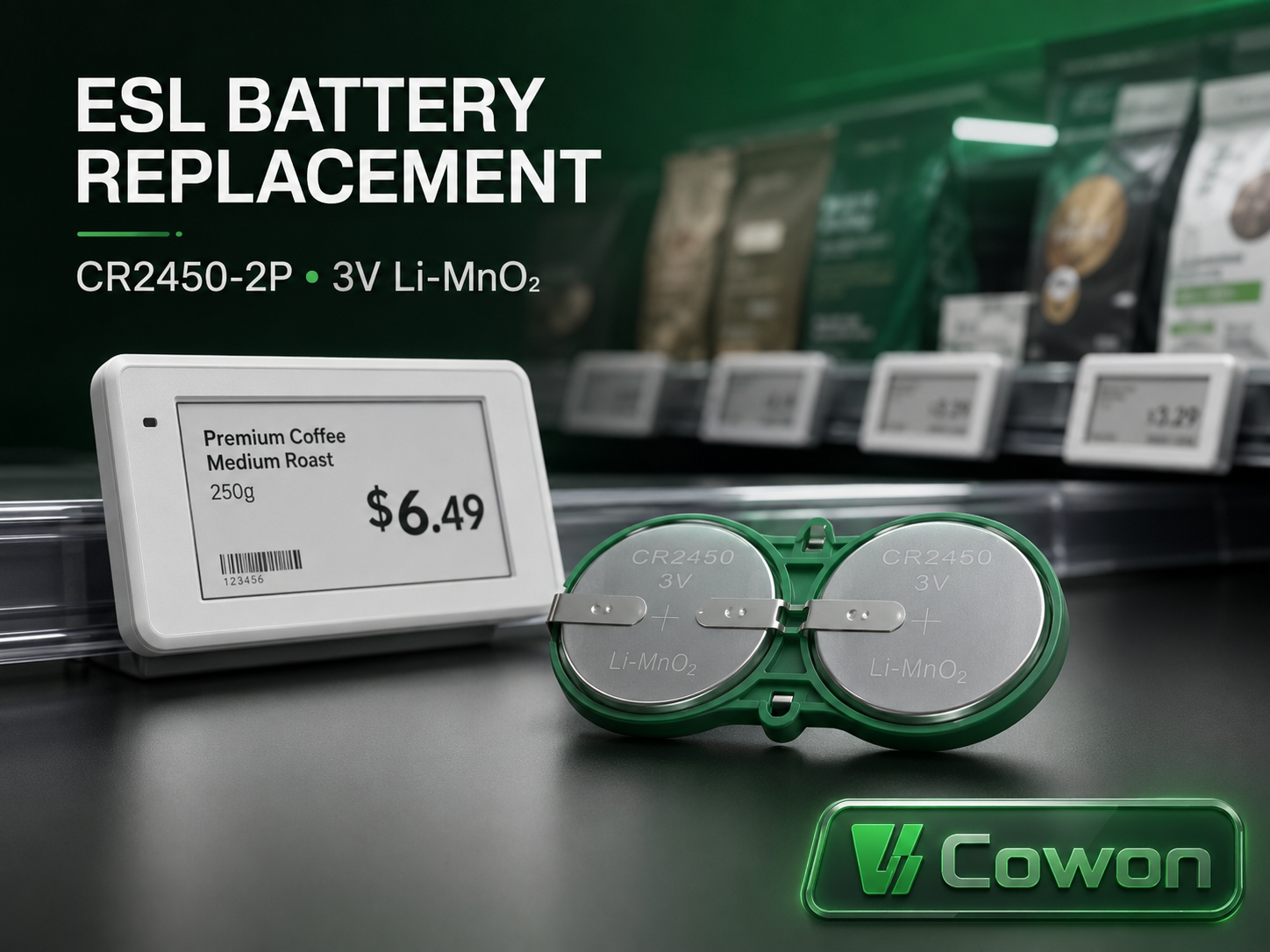
Electronic Shelf Label Battery Replacement Guide: How to Choose the Right CR2450 Pack
2026/08/24Learn how to select a CR2450 replacement battery for electronic shelf labels by checking voltage, capacity, tabs, holders, polarity and compatibility.
-
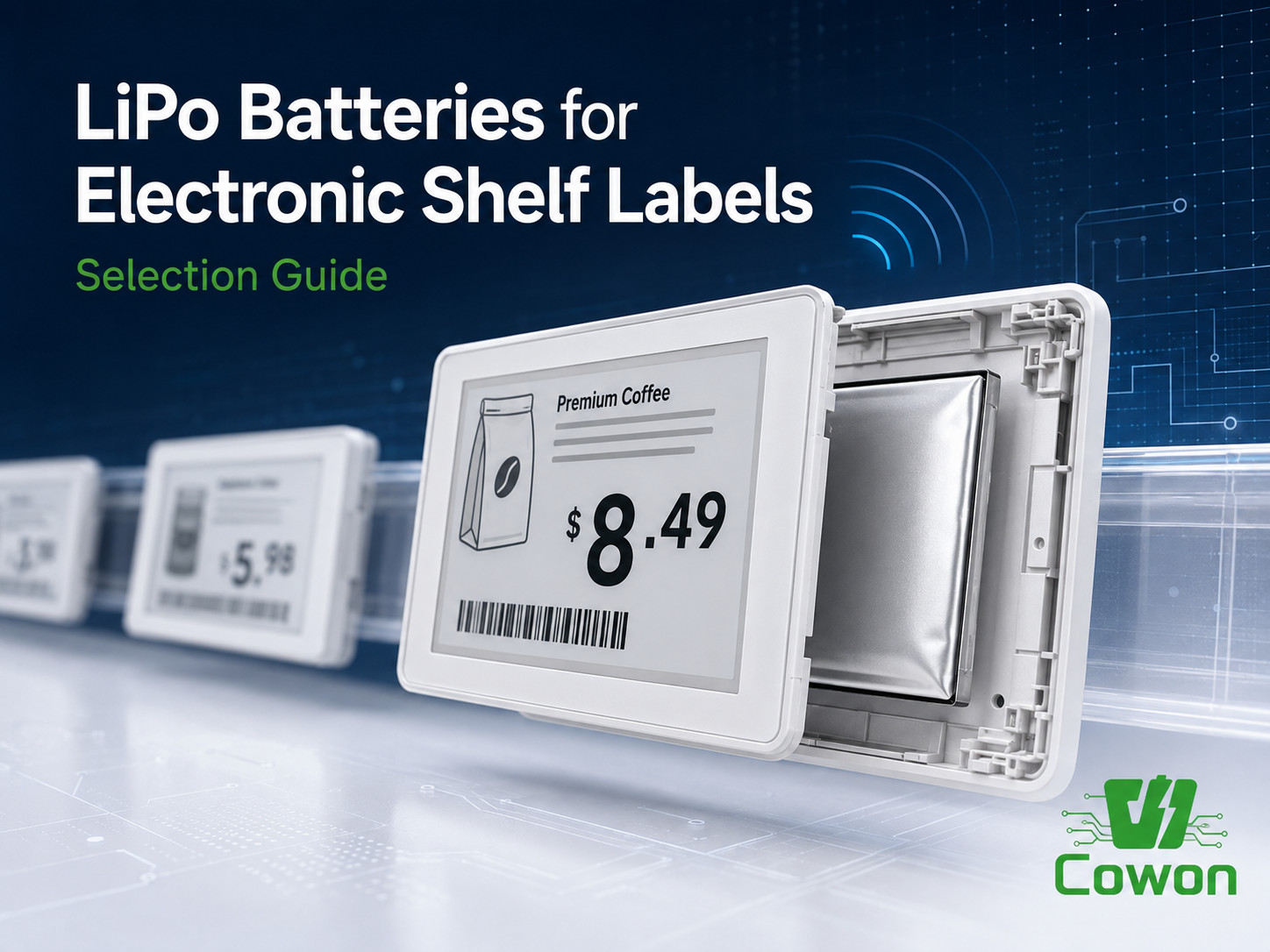
LiPo Batteries for Electronic Shelf Labels: Selection Guide
2026/08/17Learn how to choose a lithium polymer battery for electronic shelf labels, covering capacity, thickness, pulse current, cold storage, service life and compliance.
-
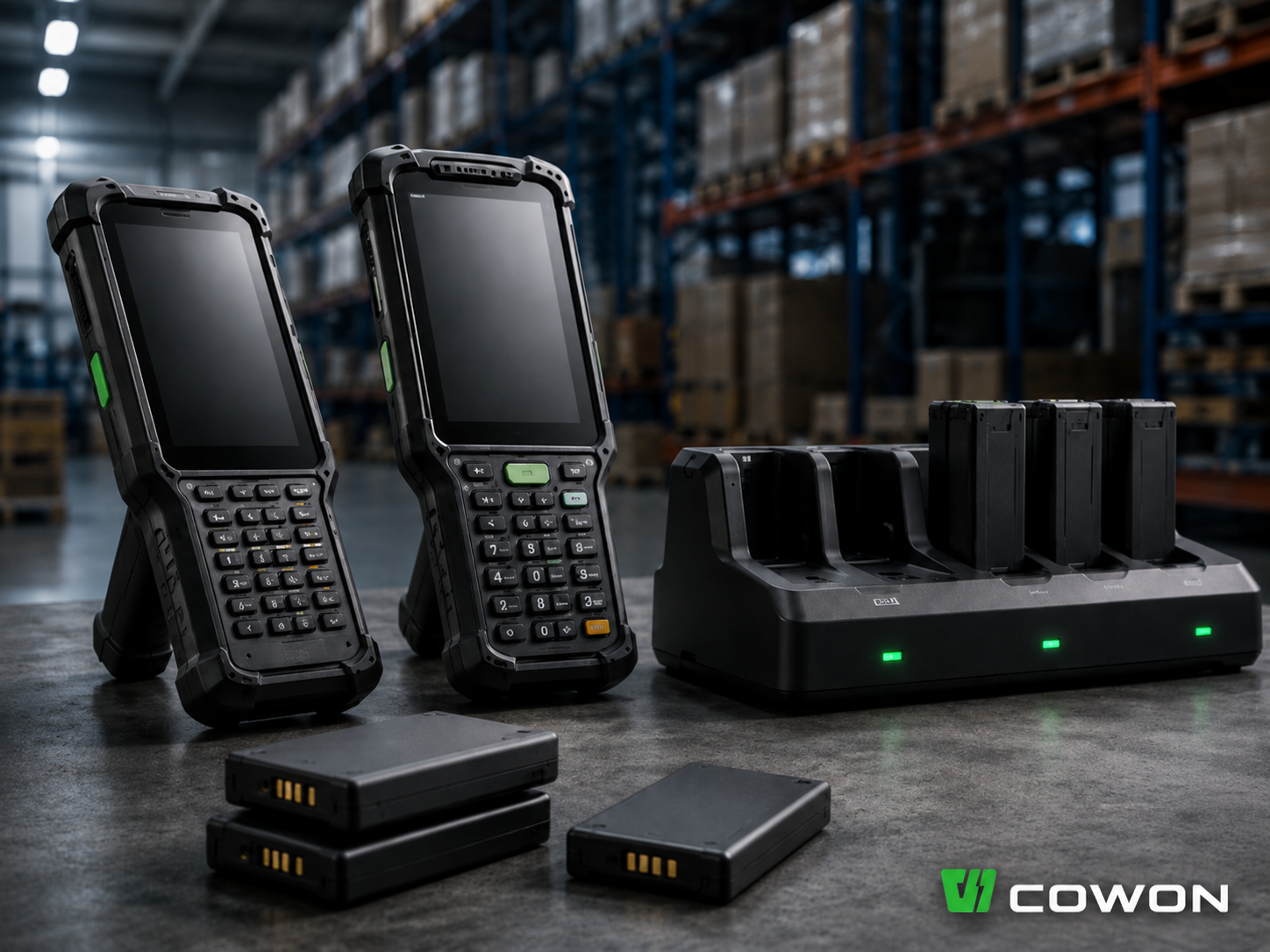
How Many Spare Batteries Do Warehouse Scanners Need?
2026/08/10Calculate spare batteries for warehouse PDAs and barcode scanners using fleet size, shift length, battery runtime, charging time and charger capacity.