EN
EN

News
Lithium-Ion vs. Lithium Polymer Batteries: Key Differences, Advantages, and Applications
Lithium-ion (Li-ion) batteries and lithium polymer (Li-Po) batteries are two widely used rechargeable battery technologies in modern electronic devices. While both are based on lithium chemistry, they differ significantly in structure, form factor, safety characteristics, and application scenarios. Below is a detailed comparison to help engineers and procurement professionals select the right battery solution.
1. Electrolyte Type
Lithium-ion batteries typically use a liquid electrolyte, which allows for efficient ion transport and stable performance.
Lithium polymer batteries use a polymer-based or gel-like electrolyte, enabling thinner designs and flexible shapes compared to traditional liquid electrolytes.
2. Physical Structure and Packaging
Lithium-ion batteries are commonly manufactured in cylindrical or prismatic metal casings, such as the well-known 18650, 21700, or prismatic cell formats.
Lithium polymer batteries are generally packaged in aluminum-plastic pouch enclosures, offering a lightweight structure and greater design flexibility.
3. Shape and Size Flexibility
Lithium-ion batteries follow standardized sizes and formats, which simplifies integration and replacement in mass-produced devices.
Lithium polymer batteries can be custom-designed in terms of thickness, shape, and dimensions, making them ideal for ultra-thin, irregularly shaped, or space-constrained products.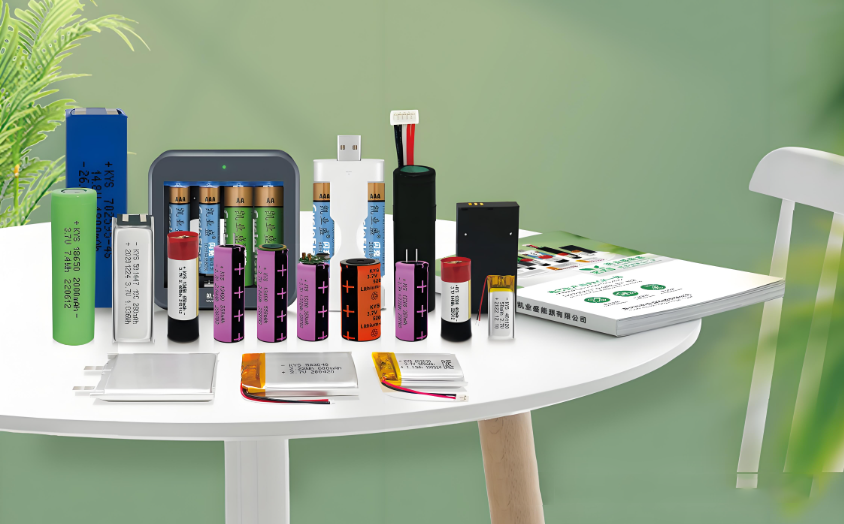
4. Energy Density and Capacity
Due to standardized dimensions, lithium-ion batteries offer consistent and predictable energy density.
Lithium polymer batteries excel in space utilization, allowing designers to maximize capacity within limited or unconventional spaces. However, their intrinsic energy density is generally comparable to that of lithium-ion batteries rather than significantly higher.
5. Safety Performance
Lithium-ion batteries may experience electrolyte leakage or thermal runaway under extreme conditions such as overcharging, short circuits, or high temperatures.
Lithium polymer batteries provide improved safety characteristics due to their gel-like electrolyte and pouch structure, which reduces leakage risk. Nevertheless, internal short circuits or improper handling can still result in safety incidents.
6. Cycle Life
Lithium-ion batteries typically achieve 500 cycles or more, depending on cell chemistry and operating conditions.
Lithium polymer batteries usually offer a cycle life between 300 and 500 cycles, which is slightly lower on average.
7. Cost Considerations
Lithium-ion batteries benefit from highly mature manufacturing processes and standardized production, resulting in lower overall costs.
Lithium polymer batteries are often custom-manufactured, leading to higher costs due to non-standard designs and lower production volumes.
Conclusion
For applications requiring long cycle life, cost efficiency, and standardized replacement, lithium-ion batteries are generally the preferred choice.
For products with strict space constraints, thin profiles, or customized shapes, lithium polymer batteries offer clear structural and design advantages.
| Parameter | Lithium-Ion Battery | Lithium Polymer Battery |
|---|---|---|
| Electrolyte | Liquid electrolyte | Polymer-based / gel electrolyte |
| Typical Packaging | Cylindrical or prismatic metal casing | Aluminum-plastic pouch |
| Shape & Size | Standardized formats (e.g. 18650, 21700) | Customizable shapes and thickness |
| Energy Density | High and consistent | Comparable, with better space utilization |
| Cycle Life | Typically ≥ 500 cycles | ~300–500 cycles |
| Safety | Stable, but risk under abuse conditions | Improved leakage resistance |
| Design Flexibility | Limited | Very high |
| Weight | Slightly heavier | Lighter |
| Manufacturing Cost | Lower due to mass production | Higher due to customization |
| Typical Applications | Power tools, EVs, energy storage | Wearables, drones, medical devices, thin electronics |