EN
EN

News
How to Judge a Battery: The Ultimate Guide to Li-ion Performance Metrics
Lithium-ion batteries are increasingly being used due to their excellent performance. Battery performance evaluation requires comprehensive consideration from multiple dimensions, with the following being the most core indicators:
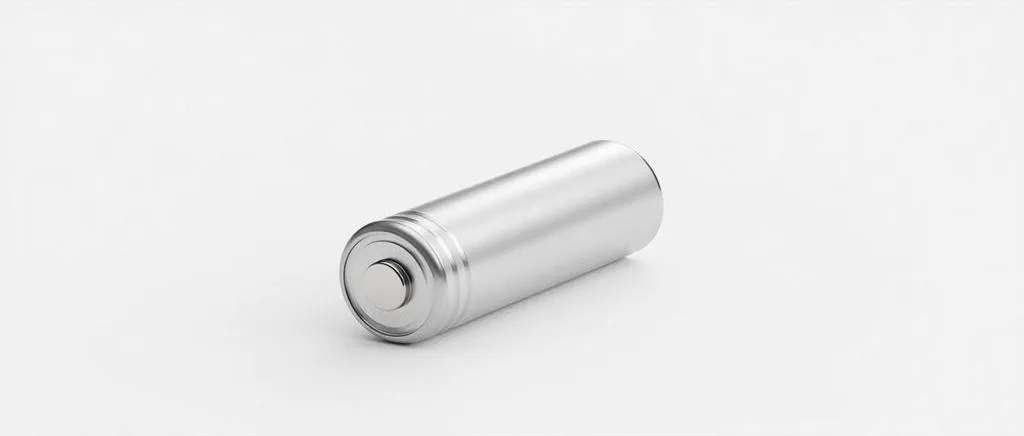
(1) Capacity. Capacity is one of the basic characteristics of a battery. It represents the amount of electricity that a battery can discharge. Battery capacity refers to the amount of electricity that can be obtained from the battery under certain charging and discharging conditions (charging and discharging system, charging and discharging current, charging and discharging cut-off voltage, and ambient temperature). It is the integral of current over time and is generally expressed in ampere-hours (Ah) or milliampere-hours (mAh) . mAh is commonly used for mobile phone batteries and Ah is commonly used for electric vehicle batteries . It directly reflects how much electricity a battery can store and directly affects the battery's maximum operating current and operating time.
(2) Energy density. This refers to the amount of energy that a battery can store per unit mass or volume. It is generally expressed as mass energy density ( watt-hours per kilogram , Wh/kg) or volume energy density ( watt-hours per liter , Wh/L) . A high energy density means that a battery can store more energy at the same weight or volume.
(3) Discharge characteristics and internal resistance. Battery discharge characteristics refer to the stability of the operating voltage, the height of the voltage platform, and the high-current discharge performance of the battery under a certain discharge system. It indicates the battery's ability to carry a load. Battery internal resistance includes ohmic internal resistance and electrochemical resistance. When discharging at a high current, the impact of internal resistance on discharge characteristics is particularly obvious.
(4) Temperature characteristics and operating temperature range. The working environment and usage conditions of electrical equipment require that the battery have good performance within a specific temperature range. The current operating temperature range of lithium batteries is generally between -30 ~ +55 ℃.
High temperature performance: High temperatures typically accelerate chemical reactions and may increase power in the short term, but they can severely accelerate aging, shorten lifespan, and increase safety risks (thermal runaway).
Low-temperature performance: At low temperatures, the electrolyte conductivity decreases and the reaction kinetics slow down, resulting in a sharp increase in internal resistance and a significant decrease in available capacity and power (such as mobile phones shutting down in cold outdoors and electric vehicles having reduced range).
(5) Storage performance. After a period of storage, the battery performance may change due to certain factors, leading to battery self-discharge, electrolyte leakage, battery short circuit, etc.
6) Cycle performance. Cycle life refers to the number of cycles a secondary battery can go through after being charged and discharged according to a specific schedule until its performance degrades to a certain level (typically 80% of capacity ). It primarily affects the durability and service life of the battery. The longer the cycle life, the more durable the battery, the less frequent replacements, and the lower the overall cost of ownership. During battery use, deep charge and discharge, high-rate charge and discharge, high / low temperatures, overcharge and over-discharge, and other factors can significantly shorten the battery's cycle life.
(7) Charge and discharge rate performance. This mainly describes the ratio of the battery's charge and discharge current to its capacity. 1C represents the current required to discharge a fully charged battery in one hour (current (A) = capacity (Ah) ). Its significance is to measure the battery's ability to withstand high current charge and discharge. For example, a 5Ah battery:
0.5C discharge = 2.5A discharge current.
2C discharge = 10A discharge current.
0.5C charging = 2.5A charging current.
High-rate charge and discharge capabilities are the basis for achieving fast charging and meeting high power requirements, but high-rate charge and discharge usually reduce the actual available capacity and affect the lifespan.
(8) Efficiency. Coulombic Efficiency : The ratio of the charge released during discharge ( Ah ) to the charge input during charge ( Ah ). This reflects charge loss due to side reactions (such as gassing) during the charge and discharge process, with an ideal value of 100% . Energy Efficiency : The ratio of the energy released during discharge ( Wh ) to the energy input during charge ( Wh ). This combines Coulombic efficiency and voltage efficiency (the difference in charge and discharge voltage due to internal resistance), with an ideal value of 100% .
The higher the efficiency, the less energy is wasted, the more economical the charging is, and the less heat is generated.
(9) Safety performance. This mainly refers to the safety performance of the battery under normal use and abuse conditions. Abuse conditions mainly include overcharging, over-discharging, short circuit, falling, heating, puncture, extrusion, impact, vibration, seawater immersion, low pressure, high temperature, etc. The quality of anti-abuse performance is the primary condition that determines whether the battery can be widely used. Batteries with insufficient safety will not be accepted by the market.
When evaluating and comparing batteries, it's important to note that these indicators are measured under specific test conditions (temperature, charge/discharge rate, final voltage, aging status, etc.). Analyzing indicator values without considering these test conditions is meaningless. In actual applications, a battery's overall performance is often the result of a trade-off between these indicators.